
The first time a client lies under an LED panel, they usually laugh. The glowing lights feel a little like a science fiction prop, and the treatment is so calm that it seems like nothing is happening at all. No heat to speak of, no sting, no peeling. Just colored light and a quiet twenty minutes. It is reasonable to wonder whether such a gentle thing can do anything real.
It can, and the reason is that skin does not only respond to abrasion and acids. It also responds to light. Certain wavelengths reach into the skin and nudge the cells there to behave a little differently, calming inflammation, encouraging repair, and slowing the growth of the bacteria involved in breakouts. The effect is subtle and it builds, but it is genuinely rooted in how our cells absorb energy.
Why color is really about depth
The different colors you see are different wavelengths, and wavelength decides how far the light travels into the skin. Shorter wavelengths, in the blue range, stay near the surface. Longer wavelengths, in the red and near-infrared range, reach deeper. That is the whole logic of the treatment. You choose a color based on where in the skin the problem lives.
Red light, for repair and calm
Red light penetrates further, down to where your collagen-producing cells sit. The energy it delivers seems to support those cells as they do their work, which over a series of sessions can mean firmer texture and a healthier, more even look. Red light is also a quiet anti-inflammatory, so it soothes redness and helps skin recover, which is why it pairs so well after treatments like microneedling or a peel.
It is worth setting expectations honestly. Red light is not a laser and it will not erase a deep wrinkle in one visit. What it does is support and maintain, gently and consistently. Think of it as good conditioning for the skin rather than a dramatic correction.
Blue light, for breakouts
Blue light stays up near the surface, which is exactly where acne-causing bacteria live. It targets those bacteria and helps reduce their numbers, which can calm active breakouts and cut down on new ones. For people whose skin runs oily and congested, a course of blue light can take some of the daily heat out of the situation without the dryness that harsher acne treatments sometimes bring.
Because blue and red do different jobs, many treatments combine them, calming a breakout while also supporting the repair of the skin around it. A good provider reads your skin and decides how to weight the two.
LED is a consistency treatment, not a one-time fix. A single session leaves skin looking calm and refreshed, but the changes that last come from a regular rhythm over several weeks. If you cannot commit to showing up, spend your money elsewhere first.
At-home masks versus a clinic panel
You have surely seen the home LED masks, and they are not a scam. They can be a lovely maintenance tool, and using one while you unwind in the evening is a pleasant, low-effort habit. The catch is power and coverage. Professional panels are stronger, cover more of the face evenly, and are built to deliver a reliable dose in each session. A home mask is the gentle daily version. A clinic panel is the concentrated one.
If you already own a mask, keep using it. Just know that the results you read about in reviews of professional treatments usually come from stronger equipment used on a steady schedule, often layered alongside other services. The home device supports that work rather than replacing it.
Where light fits in a real routine
The nicest thing about LED is that it plays well with almost everything. It has essentially no downtime, so you can add it to the end of another treatment or slot it in on its own. After a peel or a microneedling session, red light can ease the skin's recovery. On its own, a standing appointment can keep inflammation down and support your collagen quietly in the background. It is one of the few treatments where the honest answer to "will this interfere with what I already do" is almost always no.
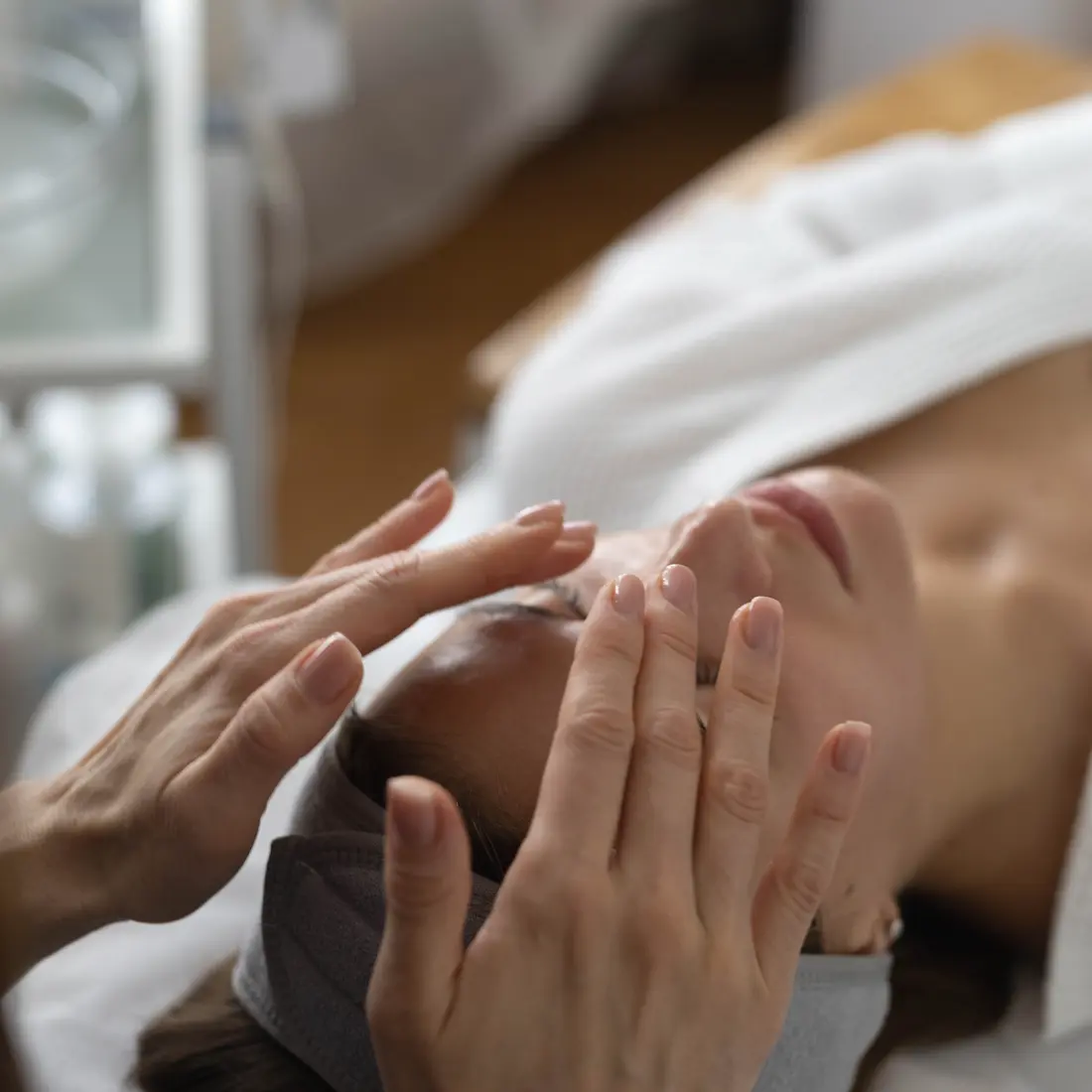
Because it is so gentle, LED is also a good entry point for people who feel nervous about more aggressive procedures. There is no needle, no acid, no recovery to plan around. You lie down, close your eyes, and let the light do its slow work. For a lot of my clients it becomes the calm anchor of their skincare month, the appointment they look forward to rather than brace for.
If you want to try it under proper equipment and get a read on which wavelengths suit your skin, it is worth booking with a clinic that treats light as part of a bigger plan. The team at Skin Anthology can look at your skin and tell you whether LED is best on its own or paired with something else, which is a far more useful answer than any mask reviewer can give you.
Gentle does not mean pointless. Some of the most reliable skin care is the quiet, consistent kind, and light therapy is a fine example of it. Show up, be patient, and let the small effects add up.
Licensed esthetician in the Beverly Hills area. She has spent about a decade helping clients build calm, sustainable skin habits, and she writes here between appointments.